
Previous Residents at Palisades Park Addresses
Begin a backward address trail with the date that matters. A current assessment record can identify parcel fields and an assessment-party lead. A recorded deed can document a transfer. A Sanborn sheet can show whether a structure stood at a location on a map date. Directories, census schedules, newspapers, and probate files can add household or family context. Those sources overlap, but none replaces the others. This era table keeps the evidence for previous residents of a Palisades Park address in its proper lane.
| Source | Years it covers | Where held | What it can show |
|---|---|---|---|
| Bergen online land-record index | January 1, 1970 to present on the public page | Bergen County Clerk Land Records | Deed or mortgage party, date, and instrument lead |
| Older Bergen deeds | County and Archives material; pre-1785 deeds described in Archives resources | County Clerk and New Jersey State Archives | Earlier legal ownership, subject to series and index limits |
| Assessment and tax search | Current tax databases and SR1A sales | Bergen Board of Taxation | Owner field, municipal block and lot, assessment and sale data, not title |
| Sanborn maps | Palisades Park 1911; Princeton index also identifies 1923 and 1930 sheets | Library of Congress and Princeton | Building footprint, use, and street context |
| Regional directories | Documented 1897, 1898, 1904-1915, and 1926-1973 runs | Heritage Center and GSBC | Historical name-and-address lead, not verified as a Palisades Park run |
| Federal census | 1830-1940 except 1890 | Archives, library databases, and federal sources | Household at the enumeration date, subject to boundary and release rules |
| Permit or certificate file | Borough-maintained records | Palisades Park Building Department or OPRA | Construction, use, or approval trail, not a transfer record |
For a recent transfer, start with the parcel and land index. For an older question, expect a handoff to deed books, microfilm, Archives material, maps, or library collections. The absence of a public online result is not evidence that the earlier record never existed.
Starting a Palisades Park Address Trail
A backward search should start with a current parcel identifier, not a guessed individual. The Bergen assessment search accepts Location, Owner Name, Block, Lot, and Qualifier after selecting Bergen County and district 0245. Record the situs address, block, lot, qualifier, assessment year, and any visible owner or sale fields with their warnings. A situs address is the physical location used by the assessor or GIS. A mailing address is where a notice may go. They can differ.
The parcel key then carries the research into the deed index. A legal description is the block, lot, metes-and-bounds, or other deed language identifying land. It is more durable than a street number when an older map, boundary, or address format differs. Do not create a block or lot from an address alone, and do not call an assessment-party name proof that someone occupied the property.
Evidence path: normalized address → assessment or GIS parcel → recorded instrument → earlier legal description → archival or historical source. At every stage, save the input, the result, and the access date.
Tracing Palisades Park Past Owners
The Bergen County Clerk Registry is party-centered. Its public electronic land-record page begins January 1, 1970, so an address has to be translated into a party and parcel lead first. Search the current assessed owner as a grantee to find the purchase instrument. Read the seller as grantor, then search that seller as an earlier grantee. Each repeat should preserve the document date, type, parties, consideration, municipality, block and lot, and legal description. Search initials, middle names, former names, and entity suffixes where the records support them.
- Locate the current parcel and assessment-party lead, then retain the block, lot, qualifier, and address exactly as shown.
- Use the Bergen land-record index to search the party as a grantee and identify the purchase instrument.
- Read the instrument itself. Note the grantor, grantee, date, legal description, and book/page or instrument number when available.
- Search the grantor as an earlier grantee, then repeat the chain with the prior legal description as a continuity check.
- Check related mortgages, assignments, satisfactions, releases, liens, and lis pendens as separate filings.
- At the online cutoff, ask the Clerk whether counter research, a staff search, microfilm, or an Archives route is needed.
- Grantor
- The party transferring an interest in a recorded instrument.
- Grantee
- The party receiving that interest. A grantee entry is a transfer lead, not a residency finding.
- Chain of title
- The documented sequence of conveyances used to follow ownership backward.
- Legal description
- The land-identifying language in a deed, useful when a street address changes or is incomplete.
Deed copies are charged separately from a search. The Clerk lists deeds at $45 for the first page and $10 for each additional page, with separate staff-search, certification, and photocopy charges. Confirm the current fee and image availability before ordering.
Palisades Park Maps for Past Addresses
Sanborn sheets offer a three-date built-environment check. The Library of Congress identifies a 1911 set that includes Palisades Park, while Princeton's index identifies 1923 and 1930 sheets. Compare a street or intersection, a map title, date, sheet number, footprint, and building use with the legal description and parcel trail. A map can establish that a structure or street context existed on its publication date. It cannot establish who lived there.
View the documented Princeton Sanborn-map index before matching an address to a historic sheet.
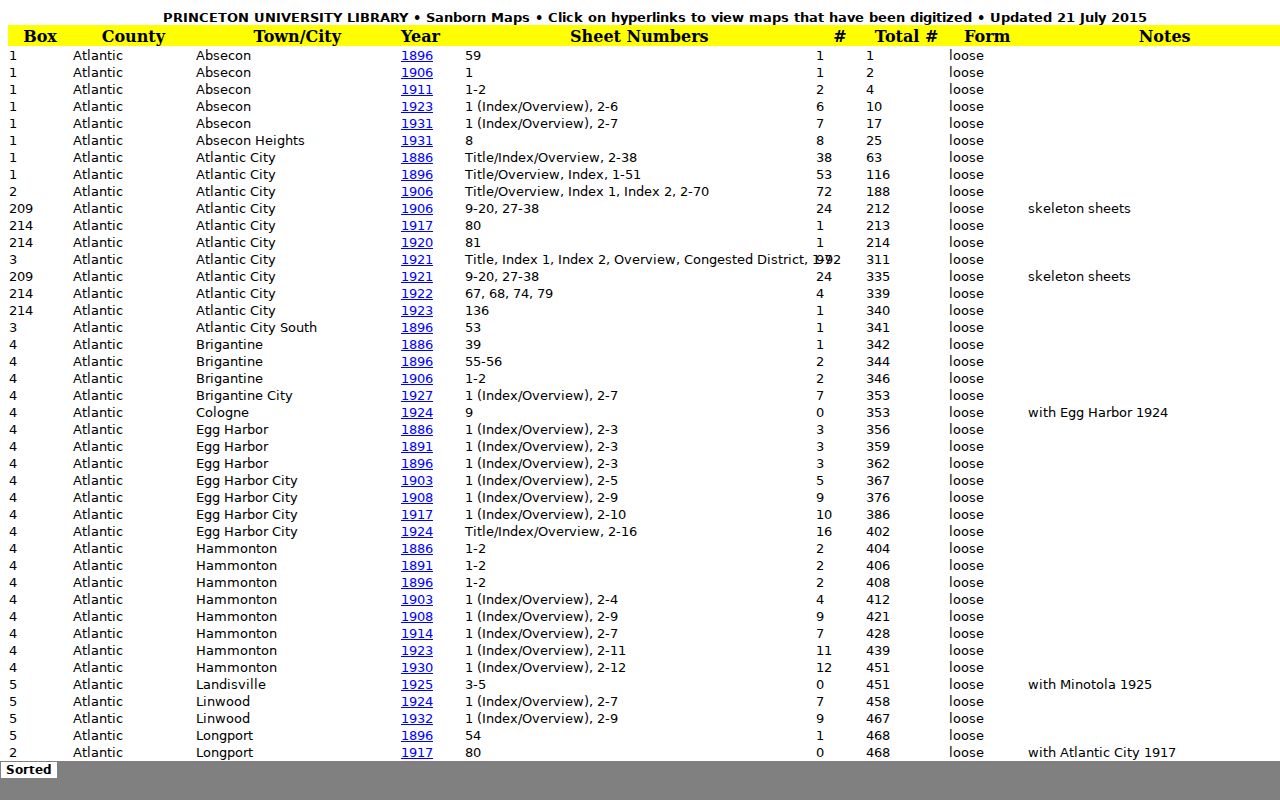
The map index supports a sheet-and-date citation, which is far stronger than assuming a modern street number had the same historical meaning.
Note: Historic map labels can use broader Palisades, Englewood, or Fort Lee wording, so match the municipality, street, intersection, and date before connecting records.
Palisades Park Previous Records Gaps
Several honest gaps shape a previous-residents search. No official Palisades Park street-renumbering or renaming history was located. No verified borough-specific historical directory run was found. Bergen does not publish a complete public online probate index, and the exact GIS controls were not text-inspectable. These gaps do not justify guessing. Compare a map sheet, legal description, tax map, street or intersection, municipality, and date, then ask the custodian whether a particular older index or book covers the borough's predecessor land.
The Ridgewood House History guide is a useful regional method because it points researchers toward assessment and tax maps, Hackensack deeds, grantor-grantee indexes, Sanborn maps, census, newspapers, wills, photographs, and local-history material. It does not establish that a Ridgewood collection is a Palisades Park collection. Label every regional hit with its actual geography, volume, year, and page.
A historical directory, map, assessment card, recorded deed, newspaper item, and probate file all have different weight. Keeping a citation trail prevents a clue from becoming an unsupported claim about who lived here before.
Pairing Palisades Park Directories and Census
Directories and census schedules supply the household layer after the property trail is established. An actual Palisades Park directory entry was not inspected, and no Palisades Park-specific directory series was verified. Nearby collections can still be worth a narrow staff question: ask whether a named year includes a Palisades Park directory, telephone book, newspaper page, or obituary and whether it is indexed by address. A no-result answer is useful. It signals a pivot to maps, deeds, census, newspapers, or probate rather than a substitution of another town's directory.
- Start with the earliest confirmed name and address from a deed, map, or dated record.
- Search the same street across nearby directory years, keeping initials, spouse or widow notation, and alternate spellings in the citation.
- Compare the closest federal census date. The documented method pairs 1897 with 1900, 1904-1915 with 1910, and 1926-1930 with 1930.
- Use a newspaper, obituary, tax record, or probate file only as a separate corroborating source.
- Record the directory volume, page, collection, and geography because publication and enumeration dates do not match exactly.
Directory entries can omit people and can reflect a subscriber or a household notation rather than every person at an address. For the holdings and entry-reading details, use the Palisades Park directory book.
Palisades Park Archive Routes
The New Jersey State Archives is the fallback for older county and state series. Its documented scope includes federal census from 1830-1940 except 1890, state census from 1855-1915 with incomplete early series, county deed microfilm to 1900, Bergen deeds before 1785, wills and inventories, surrogate microfilm, naturalization, and historical maps. Search by county and historical municipality, since an old schedule or map may not use the same label as a present address.
Use the New Jersey State Archives genealogical collections search to identify the relevant series before requesting material.
The collections route is a starting point for a specific county, name, year, and record series, not a universal address index.
Palisades Park Archive Services
The broader New Jersey State Archives research services route can help identify an archive handoff when an older Bergen index is not available online. Bring the deed citation, block and lot, historical street wording, and a narrow date range so archive staff can distinguish the needed series from a general people search.
That preparation helps staff identify a map, deed, census, naturalization, probate, or other series without treating the archives as an all-purpose address lookup.
Palisades Park Previous Residents Probate Trail
Probate and obituary material can close a family or estate trail, but neither is a shortcut to a current address. Bergen Surrogate says it maintains wills dating back to 1714. Its records are judicial records subject to Court Rule 1:38 and confidentiality exceptions, appointments are required, and no complete public online index was found. A probate record can identify an estate, executor, heir, or fiduciary connection that needs to be read in the case file and paired with a separate deed or historical source.
Consult the official Bergen County Surrogate probate route for appointment and records access details.
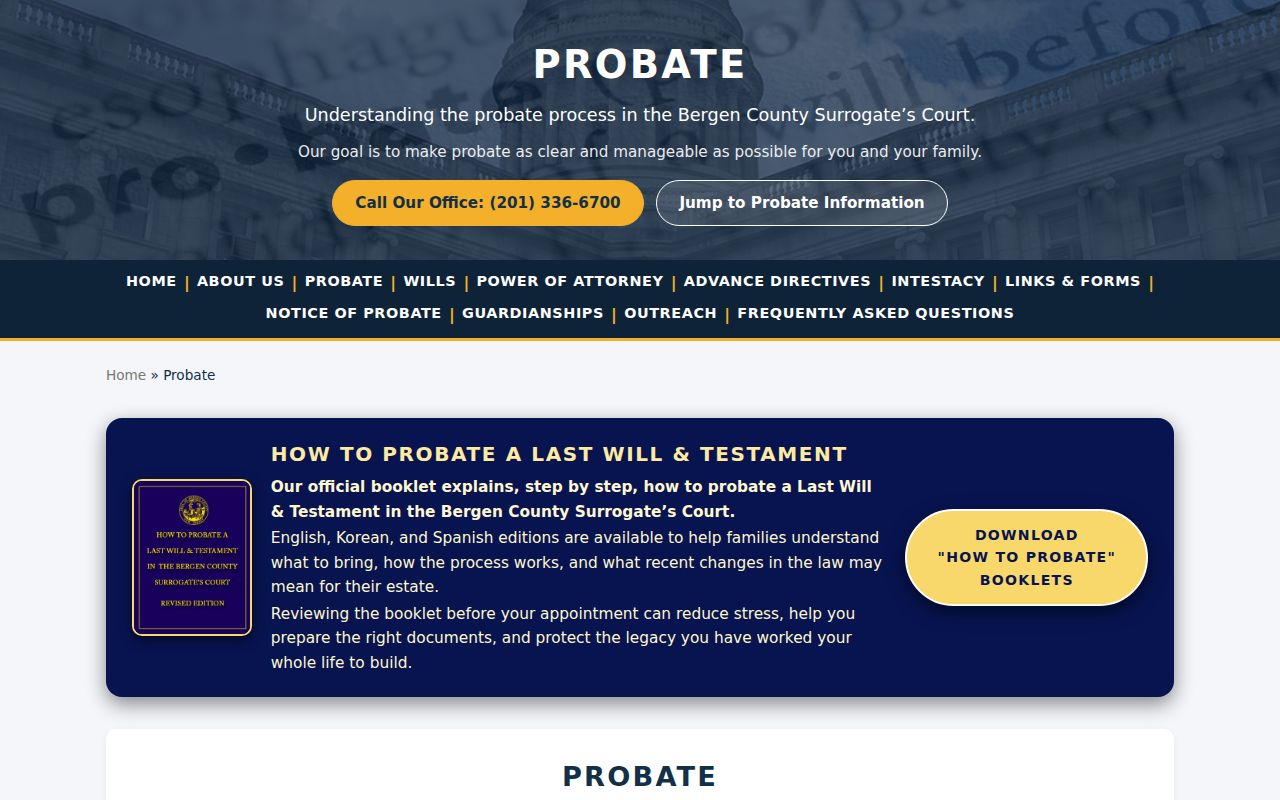
The Surrogate route is an office and appointment handoff, especially when a name in a deed points to an estate, trust, or fiduciary rather than one identifiable resident.
Newspapers and obituaries held by the Ridgewood Heritage Center or GSBC can add a dated publication clue. Preserve its title, page, and publication date, and treat it as historical publication evidence rather than an official current record.
Past Households at Palisades Park Addresses
Past households are the last layer, not the first. A deed tracks a recorded property interest. An assessment records a tax snapshot. A map records a place at a time. A directory or census may provide a household clue, while an obituary or probate file may add family context. Keep the source labels in the finished history so the distinction between record owner, historical occupant, and map context remains visible. That restraint matters when studying previous residents in a dense borough with changing address and boundary context.
Lawful use. Research past Palisades Park households for family history, estate work, property history, or personal curiosity, and never use historical records to stalk, harass, or harm a living person.
For a construction or certificate record that fills a date gap, begin with the Borough Building Department or a narrow OPRA request. State the address, date range, and final record sought. Do not request private plans or protected details, and do not treat a permit filed by an agent as proof of ownership or occupancy.